Can You Recover Compensation If The Driver Who Hit You Fled?
Usually yes. Uninsured motorist coverage on your own auto policy is built for exactly this situation, and it applies whether or not the driver is ever identified.
Your own policy is the primary path when the driver is unknown.
Investigation identifies a surprising number of fleeing drivers.
Prompt notice to police and your insurer protects the claim.
Leaving the scene of an injury crash is a felony in Illinois.
The claim does not depend on catching anyone, though catching them changes what is available.
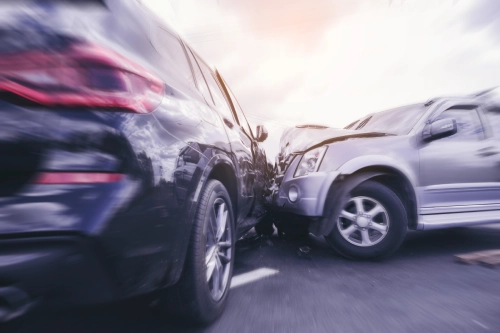
A hit-and-run car accident in Chicago leaves you with an injury and no obvious defendant, which is a uniquely disorienting position. People assume that a driver who got away has taken the claim with them, and that is usually not true.
There are two routes to compensation here, and they run in parallel. One is finding the driver. The other is your own insurance policy, which responds regardless.
Key Takeaways about Chicago Hit and Run Compensation
Illinois requires drivers involved in injury crashes to stop, and failing to do so is a felony.
Uninsured motorist coverage generally responds when the at-fault driver is unidentified.
Timely notice to law enforcement and to the claimant’s own insurer can be a condition of coverage.
Investigation of nearby video, debris, and witness accounts identifies many fleeing drivers.
Most Illinois injury claims must be filed within two years, with shorter deadlines in some situations.
A recovery can be reduced by the claimant’s own share of the fault.
What Does Illinois Law Require Of A Driver Who Causes A Crash?
Stopping, remaining at the scene, and giving aid. Under 625 ILCS 5/11-401, a driver involved in a crash resulting in injury or death must stop at the scene, remain there, and provide information and assistance.
Failing to comply is a Class 4 felony, not a traffic ticket. Illinois also authorizes chemical testing of a person arrested for violating that section when the testing happens within 12 hours of the crash, which tells you something about why some drivers leave.
That criminal exposure matters to your civil claim in a practical way. A driver facing a felony has a strong incentive to stay gone, and a driver who is caught often has a criminal case running alongside your claim.
How Uninsured Motorist Coverage Fills The Gap
This is the part most people do not know they have. Illinois auto policies carry uninsured motorist coverage, and an unidentified hit-and-run driver is generally treated as an uninsured driver for that purpose.
The claim goes to your own insurer, which is an odd experience. You are making a claim against the company you pay premiums to, and it will evaluate that claim much the way the other driver’s carrier would have.
What That Practically Means
Your insurer will ask for a recorded statement, request medical records, and eventually make an offer. It is still an adversarial evaluation even though the company is nominally on your side.
Coverage also has limits, and they are often the same modest amounts as liability coverage. Where injuries are serious, identifying the driver, or a second responsible party such as an employer, can matter enormously.
Can An Unidentified Hit-And-Run Driver Still Be Found?
More often than people expect, and the window is short. Cars leave evidence, and city streets are full of cameras that nobody has thought to ask about yet.
The material that produces identifications:
Business and residential video. Storefronts, garages, gas stations, and doorbell cameras along the route, not only at the impact point.
Vehicle debris. Broken trim, a mirror housing, or paint transfer can narrow a make, model, and year.
Body shop records. A damaged vehicle usually has to be repaired somewhere.
Witness fragments. A partial plate, a color, or a distinctive detail is often enough combined with other evidence.
Commercial fleet identifiers. Where a delivery or work vehicle was involved, an employer may be responsible as well.
Almost all of that degrades within days. Video gets overwritten, debris gets swept, and memories blur, which is the practical reason to involve someone early rather than waiting on the police investigation.
What Evidence Matters Most In A Hit-And-Run Claim?
Documentation that establishes the collision happened as you describe, because there is no other driver to corroborate it. This is the quiet difficulty in these claims.
An insurer evaluating an uninsured motorist claim has only your account of a vehicle that is not there. Damage patterns on your car, the police report, prompt medical treatment, and any independent witness all carry more weight than they would in an ordinary two-car claim.
We send preservation letters for nearby footage in the first week and photograph the vehicle before it is repaired. Where a defect or a road condition contributed, that gets documented, too.
When Someone Else May Also Be Responsible
The fleeing driver is not always the only party, and identifying a second one changes what a claim can produce. This is worth investigating before settling for policy limits.
An employer. If the vehicle was being used for work, the employer may answer for the driver’s conduct and bring a commercial policy into play.
A vehicle owner. Where the driver and the registered owner are different people, there may be separate coverage.
A property owner. Where an obstruction at a driveway or intersection contributed to the collision.
A public entity. Where a road defect, missing signage, or signal failure played a part.
Commercial vehicles are the most productive line of inquiry. A driver who flees in a marked work vehicle is frequently identified within days, because the vehicle is traceable in a way a private car is not.
Deadlines And Notice Requirements
Two clocks run at once here, and one of them is set by your own policy rather than by statute.
Illinois generally allows two years from the date of injury to file suit under 735 ILCS 5/13-202. Where a municipality or transit agency may share responsibility, that window can drop to one year.
Uninsured motorist coverage typically carries its own notice requirements, and some policies expect a police report within a defined period. Reporting the crash promptly and notifying your insurer are the two steps that protect the claim while everything else is being sorted out.
Why The Two-Track Approach Matters
We pursue the uninsured motorist claim and the identification effort at the same time rather than in sequence. Waiting to see whether the driver turns up wastes the weeks when the video still exists.
If the driver is later identified and carries meaningful coverage, the analysis changes and your own carrier’s role may shift. Starting both tracks early is what keeps that option open.
Compensation Available After A Hit-And-Run
Illinois allows recovery for financial losses and for the personal consequences that no invoice reflects. A documented claim generally accounts for:
Emergency treatment, surgery, and anticipated future care
Rehabilitation and therapy
Lost wages and reduced earning capacity
Pain, suffering, and emotional distress
Disability, disfigurement, and loss of a normal life
Vehicle damage and related costs
One rule applies here as it does everywhere else in Illinois injury law. Under 735 ILCS 5/2-1116, a recovery is reduced by your own percentage of fault, and fault above 50 percent bars it entirely. The Illinois Department of Insurance describes the rule the same way.
Expect that argument even in a hit-and-run. With no other driver present, an insurer sometimes suggests the absent vehicle was not entirely at fault, which is a difficult claim to make and an easy one to assert.
Where A Chicago-Area Claim Is Heard
Venue affects timing. Suburban Cook County claims of $30,000 or less go to the Fourth Municipal District at the Maywood Courthouse and into mandatory arbitration before any trial date.
Serious injury claims are filed in the Law Division downtown, in front of a jury pool drawn from the whole county. Uninsured motorist claims sometimes go to arbitration under the policy instead of going to court at all, depending on the terms.
We will tell you which track applies to your situation at the outset, because it changes how long the process takes.
What The First Two Weeks Should Involve
Most of what determines a hit-and-run claim happens before anyone knows whether the driver will be found. None of it requires you to be well enough to participate.
Securing What Still Exists
We send written preservation demands to every business, garage, and residential building with a camera facing the route, not just the impact point. A fleeing vehicle passes many lenses, and the useful footage is often a block away.
Your own vehicle gets photographed and, where possible, examined before repair. Paint transfer and damage geometry can establish the striking vehicle’s height, approach angle, and sometimes its make.
Protecting The Coverage
Notice to your own insurer goes out promptly and in writing, and we confirm what the policy actually requires rather than assuming. Uninsured motorist provisions vary between carriers more than people expect.
We also handle the recorded statement your own insurer will want. It is a friendlier conversation than the one with an opposing carrier, and it is still a conversation being recorded for a claims file.
FAQs for Hit-And-Run Car Accidents In Chicago
These are questions people ask us after a driver has left the scene.
Will making an uninsured motorist claim raise my premium?
Illinois generally restricts surcharging for claims where you were not at fault, though rating practices vary by carrier and by policy. It is a fair thing to ask your agent directly. Declining to use coverage you have already paid for is rarely the better trade.
What if I did not report the crash right away?
Report it now rather than assuming it is too late. Delay gives an insurer an argument and can complicate a policy notice requirement, but it does not automatically end a claim. Explain the delay honestly, particularly if you were hospitalized.
What if I was a pedestrian or on a bicycle?
Your own auto policy may still respond even though no car of yours was involved, which surprises most people. Uninsured motorist coverage generally follows the person rather than only the vehicle. A household member’s policy may also come into play.
The police closed the investigation. Is that the end of it?
No. Law enforcement and a civil investigation have different goals and different resources, and a closed criminal file does not close an insurance claim. We routinely pursue video and records after a police investigation has gone quiet.
What if the driver is caught but has no insurance?
Your uninsured motorist coverage still applies, which is its core purpose. Whether pursuing the driver personally is worthwhile depends on their assets, and it often is not. Identifying an employer or vehicle owner is usually the more productive path.
Does my health insurance have to be repaid from a settlement?
Often yes, in whole or in part, through a lien or right of reimbursement. Private plans, Medicare, and Medicaid may each claim a portion. These amounts are frequently negotiable, and handling them well changes your net recovery.
Talk With A Chicago Hit-And-Run Lawyer
If a driver hit you and left, the evidence that could identify them is disappearing right now, and your own policy has requirements you may not know about. One conversation is enough to find out where you stand.
Call (312) 448-8181 or get in touch with us for a free, confidential consultation. You can also see how we handle car accident claims across the Chicago area, or read about the two attorneys who would handle your case. We answer 24 hours a day, we travel anywhere in Illinois, and you owe us nothing unless we recover for you.
Kennedy Watkins Injury Attorneys | 350 N. Orleans Street, Suite 9000N, Chicago, IL 60654 | (312) 448-8181